
SPIL Conference 2025
10th Sustainable Process Innovation and Modelling Conference
Maastricht, The Netherlands
9-11 July 2025
Maastricht, the birthplace of the European Union: Maastricht Treaty, officially known as the Treaty on European Union, was signed in Maastricht, Netherlands, in 1992 and went into effect in 1993. It established the European Union (EU), with EU citizenship granted to every person who was a citizen of a member state. Today, Maastricht is a pearl in the heart of Europe with touristic scene and diverse cultural activities. More information: Visit Maastricht
Early bird deadline: 1 April 2025 Extended to 15 May 2025
Abstract deadline: 1 May 2025 Extended to 1 June 2025
| Type of Participation | Early Bird (before 1 April 2025) | After 1 April 2025 |
| In-person poster/presentation | Regular: 485€ Student:450€ | Regular: 515€ Student:480€ |
| Online poster/presentation | Regular: 300€ Student:280€ | Regular: 330€ Student:310€ |
The SPIL scientific conference was founded by the late Prof Jiří Jaromír Klemeš. The 9th Sustainable Process Innovation and ModeLling Conference (SPIL) conference (previously sustainable process integration laboratory) has been re-branded and is now officially held internationally. The conference serves as a networking platform for collaboration on sustainability research, particularly topics for the joint conference as listed:
- Process Integration
- Waste and wastewater management
- Sustainable energy use and consumption
- Energy efficiency of industrial and business processes
- Circular Economy – plastics and materials
- Waste to Energy, Energy storage
- Renewable Energy and Utility System
- Footprint minimisation and mitigation (incl. environmental and health footprints)
- Cleaner production and Circular Economy
- Technoeconomic and Life Cycle Assessment
- Process analysis and modelling
- Mathematical modelling and optimisation for sustainability improvement
- Data-driven analysis for sustainability – process analysis, chemometrics and AI
But are not limited to the mentioned topics. Sustainable solutions, improving the process/conversion effectiveness, economical, environmental and social aspects, as well as policy implementation for environmental footprint mitigation, are within the interest of this conference.
Presented works (with active participation) in SPIL’ 25 will be invited to select (the choice will be evaluated and decided by editors) and submit their work to the Special Issue. World leading researchers will be invited as the Plenary Speaker or Guest of Honor to provide the up-to-date insight of their respective expertise.
Confirmed Plenary Speakers:
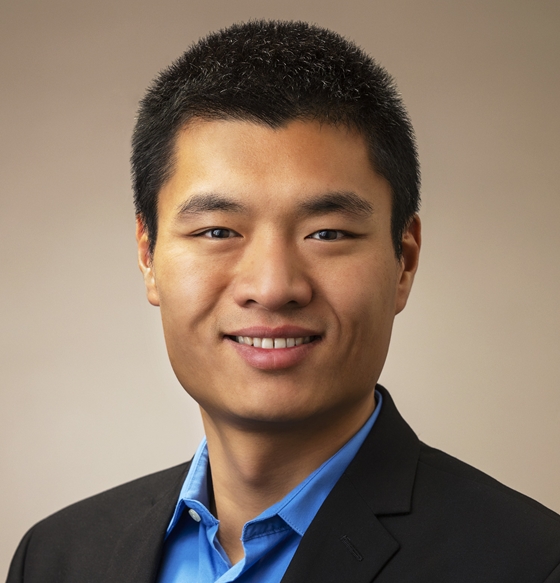
Prof Dr. Fengqi You
Fengqi You is the Roxanne E. and Michael J. Zak Professor in Energy Systems Engineering at Cornell University. He holds affiliations with multiple Graduate Fields at Cornell, including Chemical Engineering, Computer Science, Electrical and Computer Engineering, Operations Research and Information Engineering, Systems Engineering, Mechanical Engineering, Civil and Environmental Engineering, and Applied Mathematics. Within Cornell, he serves as the Chair of Ph.D. Studies in Systems Engineering, Co-Director of the Cornell University AI for Science Institute (CUAISci), Co-Director of the Cornell Institute for Digital Agriculture (CIDA), and Director of the Cornell AI for Sustainability Initiative (CAISI). Before joining Cornell in 2016, he worked at Argonne National Laboratory’s Mathematics and Computer Science Division and served as a faculty member at Northwestern University. His research focuses on fundamental theories and methods of systems engineering, with applications in materials informatics, smart manufacturing, digital agriculture, energy systems, and sustainability. Fengqi has an h-index of 88 and has authored over 300 refereed articles in journals such as Nature, Science, Nature Sustainability, Nature Food, Nature Communications, Science Advances, and PNAS. His research has garnered editorial highlights in Science and Nature, featured on dozens of journal covers (e.g., Energy & Environmental Science), and covered by leading media outlets (e.g., New York Times, BBC, Reuters, Washington Post, Forbes, Wall Street Journal, Fortune, Daily Mail, The Guardian, Agence France-Presse, Bloomberg, Scientific American, Newsweek, BusinessWeek, Hill, CNN, Harvard Business Review,New Scientist, and National Geographic).
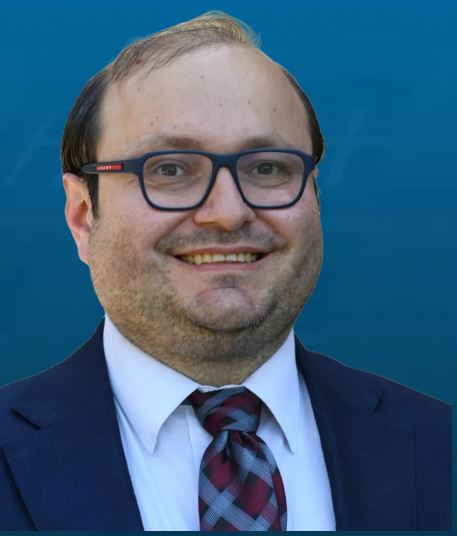
Prof. dr hab. inż. Paweł Ocłoń
Paweł Ocłoń works as Professor at Energy Department of Cracow University of Technology. His research area covers Renewable Energy, Heat Transfer, Energy Storage and Energy Efficiency. In last years he has co-authored over 60 ISI indexed papers. He is an Associate Editor of Journal of Cleaner Production, and the Co-Editor-in-Chief of Cleaner Engineering and Technology journal. He is also regular reviewer of many ISI indexed journals, as well as EU projects. He received a PhD Degree in Energy Engineering in 2013, DSc Degree in 2016 in Mechanical Engineering. From 2017 is employed as the Associate Professor at the Institute of Thermal Power Engineering. He received nationally recognized awards for his scientific achievements including the 1-st Degree Award for Scientific Achievements of the Ministry of Science and Higher Education of Poland, and the 3-year fellowship for Outstanding Young Scientists funded by the Ministry of Science and Higher Education of Poland. He isa coordinator of EU funded project RESHeat. He was also involved in over 20 projects in the area of energy systems, renewable energy and heat transfer.
List of Special Issues:
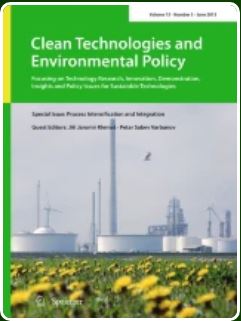
- To be announced and confirmed. Journals previously collaborated with our conferences:
Acknowledgement
The SPIL-JTF workshop was supported by StrongerCircle project funded by JTF

 SPIL Conference 2026