10th Sustainable Process Innovation and Modelling Conference
jointly with
The 3rd International Conference on Cleaner Energy and Chemical Engineering for Sustainable Circular Economy (CLE-SCE 2026)
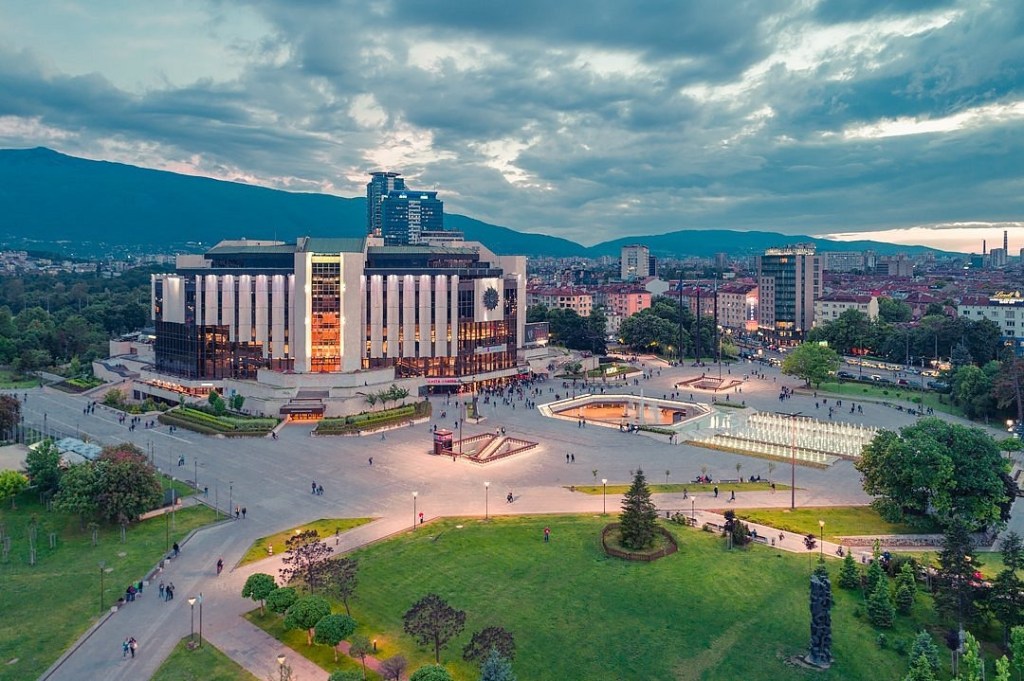
Sofia, Bulgaria
10-12 May 2026
Welcome to SPIL 2026
SPIL’26, the 10th Sustainable Process Innovation and Modelling Conference, organised by the Institute of Chemical Engineering, Bulgarian Academy of Sciences, is an established international forum dedicated to process modelling, optimisation, and integration for sustainability. The conference will be held jointly with the 3rd International Conference on Cleaner Energy and Chemical Engineering for Sustainable Circular Economy (CLE-SCE 2026).
SPIL’26 and CLE-SCE 2026 provide a high-level platform for scientific discourse, knowledge dissemination, and cross-fertilisation among researchers, engineers, and practitioners working toward cleaner energy systems, sustainable chemical engineering, and circular economy solutions.
Update: The preliminary schedule of the symposium has been set up. It will feature two plenary lectures, one workshop on knowledge transfer and scientific discussions, oral and poster presentations. The workshop will be on “Process Network Synthesis and Optimisation with P-graph”. It will include the basics of the framework, the use of P-graph Studio for formulating and solving network problems, and worked examples
Payment links will be sent to participants who has submitted an abstract.
All registration fees cover the presentation of a maximum of 2 papers, including 1 oral presentation.
The in-person fees cover the welcome party, the coffee breaks, the lunches, the Gala dinner, conference materials, and the social event.
The regular fees for both students and standard cover the welcome party, the coffee breaks, the lunches, the Gala dinner, conference materials, and the social event.
If you had received a discounted fee, it covers the welcome party, the coffee breaks, conference materials, and the social event. There will be the option to arrange lunches (2×35 EUR) and the Gala Dinner (70 EUR) at the conference registration desk
On-site participation
Online
Regular Before 15.04.2026
Regular After 15.04.2026
Discounted fee
Standard
450 EUR
550 EUR
200 EUR
200 EUR
Students
400 EUR
500 EUR
200 EUR
150 EUR
SPIL’26 is the 10th conference in the series established by Prof. J. J. Klemeš. It has been under the supervision of the PRISE Foundation since 2025. The sister conference, CLES-CE 2026, was founded by Prof. Petar Varbanov and Dr. Rayka Vladova in 2022.
The platform includes oral and poster presentations, as well as interactive discussion forums. The conference encourages participants to develop extended abstracts to be published in a book of abstracts and to be used as the basis for Special Issue invitations.
The scope includes (but is not limited to) the following topics, where the cleaner and/or sustainability dimensions are explicitly treated:
Process Systems Engineering and Process Integration for Sustainability
Sustainable supply and use of energy – industrial, residential, commercial, regional
Cleaner Production and Circular Economy
Waste and wastewater management
Minimisation and Mitigation of Environmental and Health Footprints
Technoeconomic and Life Cycle Assessment
Process analysis and modelling
Mathematical modelling and optimisation for sustainability improvement
Data-driven analysis for sustainability – process analysis, chemometrics, and AI
Operations and supply chain management
New Materials as Enablers of Low-Emission Technologies
Business and Social Aspects of Sustainable Development (New)
PRESENTATION FORMATS
Invited plenary lectures (TBA)
Oral (including keynote) and poster presentations.
Confirmed Plenary Speakers:
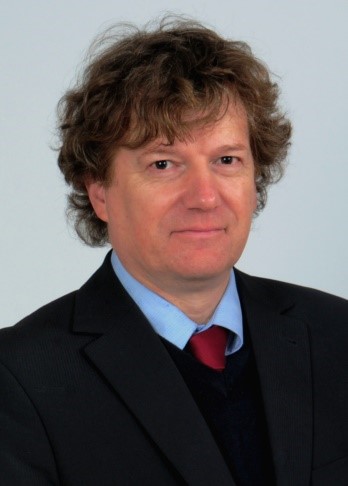
Zdravko Kravanja is a Professor and the Dean in the Faculty of Chemistry and Chemical Engineering at the University of Maribor, Slovenia. He joined the university after several years in industry (1981-1985). He was Visiting Researcher (1988-89) and Visiting Professor at Carnegie Mellon University, US (1997), and Guest Professor at Danmarks Tekniske Universitet, Lyngby on several occasions (from 1998 on). He was awarded with Pannonia Award in 2015 and Slovenian state price – Zois award for excellence in science in 2017. He was President of the Slovenian Academic Association for Engineering and Natural Sciences (SATENA) (2010-2011). He has recently become an associate member of Slovenian Academy of Engineering. His research over the years has been devoted mainly to the development of algorithmic techniques, strategies, and computerised tools for sustainable Process Systems Engineering, including Heat and Water Integration. Together with Professor Grossmann, he has developed a unique mixed-integer process synthesizer shell called MIPSYN, now upgrading to MIPSYN-Global. Recently, his research has been oriented towards the synthesis of sustainable systems, e.g. renewable based biofuel supply networks, using multi-objective optimization and monetary based sustainability measurements, sustainability profit and sustainability net present value. He has (co)-authored around 160 publications in scientific journals.
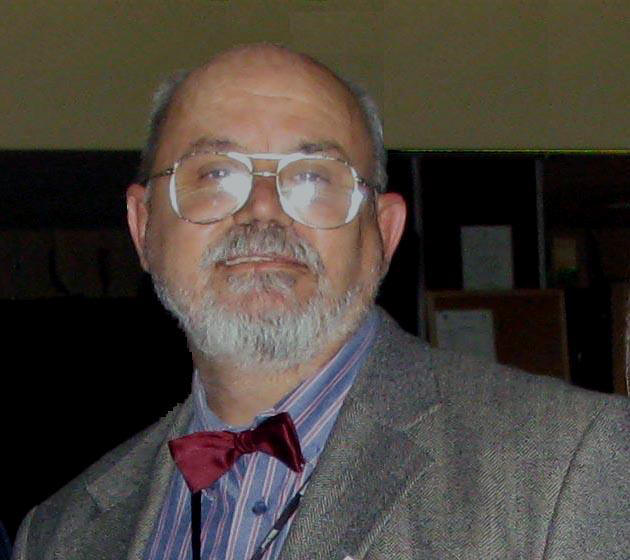
Jordan Hristov University of Chemical Technology and Metallurgy, Sofia, Bulgaria. Jordan Hristov is a Professor of Chemical Engineering. He graduated with as M.Sc.in Electrical Engineering, Technical University, Sofia, 1979. He was awarded Ph.D. in Chemical Engineering, University of Chemical Technology and Metallurgy, Sofia, Bulgaria, 1994 and DSc, in Chemical Engineering, University of Chemical Technology and Metallurgy, Sofia, Bulgaria, 2018. His areas of interest are Transport Phenomena, Mathematical Modelling, Fractional Calculus, Heat Transfer, Approximate analytical methods, and Dimensional analysis. With 185 research papers in various journals of high repute and listed by Web of Science, he got total citations of more than 3450 with h-index of 24 (Web of Science). In 2020 he was enlisted in the Stanford list of highly cited scholars among the first 1% (at 318 position in Chemical Engineering).In 2021 , 2022, 2023 and 2024he has enlisted again in the prestigious list of highly cited scholars. He was visiting professor in many universities abroad, among them: Polytechnic University of Catalonia, Spain (2002), University of Seville, Spain (2007) University of Northern Rio de Janeiro, Brazil (2009, 2010), Institute of Process Engineering, China Academy of Sciences, 2011, Tsinghua University (2018), University of Nancy, France (2021),etc. Professor Jordan Hristov is a Member of the Editorial Boards of Thermal Science, Particuology, Fractal and Fractional, Progress in Fractional Differentiations and Applications. The principle direction of his research in the last decade is related to approximate analytical solutions of non-linear and fractional problems, applications of non-singular fractional operators to non-local problems, fractional viscoelasticity, heat conduction, and non-linear diffusion.
On-Site Schedule
DAY 1
10 May 2026, Sunday (GMT+2)
16:30-17:30
Registration
17:30-17:45
Event welcome address Petar Sabev Varbanov – PRISE, Sin Yong Teng – Maastricht University, Elisaveta Kirilova – IChE, Bulgarian Academy of Sciences
Bohong Wang, Zhejiang Ocean University, China SPIL26.0003 Energy Grading and Cascade Utilisation in Energy-Integrated System based on Energy Quality Pinch Analysis
Abdulqader Bin Sahl, Maastricht University, the Netherlands SPIL26.0012 BORAG: Can AI Make Smarter Formulations? Bridging Domain Knowledge and Bayesian Optimization via Retrieval-Augmented Generation
Jan Kalina, Brno University of Technology, Czechia SPIL26.0009 Development of a Multistage Absorption System Unit for Efficient Heat and Cold Accumulation
10:00-10:30
Coffee break & Poster Session
10:30-11:30
Plenary Session PL-01 (Teams) Chair: Petar Sabev Varbanov, PRISE, HU Zdravko Kravanja, University of Maribor, Slovenia SPIL26.0036 A Systematic Framework for the Circular Synthesis of Sustainable Systems
11:30-12:30
Session 2: Cleaner Technologies and Production (Teams) Chair: Bohong Wang, Zhejiang Ocean University, CN Maliheh Razavi, Maastricht University, the Netherlands SPIL26.0015 From Waste to Value: Incorporation of EPDM Foam Waste as Fillers in Reprocessed Low-Density Polyethylene
Venko Beschkov, Institute of Chemical Engineering- Bulgarian Academy of Sciences, Bulgaria SPIL26.0018 An Integrated Sulfide Removal from Substrate for Biogas Production with Simultaneous Production of Electricity
Peter Csiba, Budapest University of Economics and Business, Hungary SPIL26.0014 The Role of CCGTs in the Future Sustainable Circular Economy Power Supply
12:30-12:45
Photo session
12:45-14:00
Lunch
14:00-15:00
Session 3: Process Modelling and Optimisation (Teams) Chair: Sin Yong Teng, Maastricht University, NL
Jinhai Xu, Xi’an Jiaotong University, China SPIL26.0007 Study on Transient Temperature Response of Solid-liquid Phase Change Based on High-power Microwave Electron Beam
Dechao Liu, Xi’an Jiaotong University, China SPIL26.0008 Characterization of hydraulic diameter and explicit modeling of relative roughness in additively manufactured mini-channels
Apostol Apostolov, Institute of Chemical Engineering, Bulgarian Academy of Sciences, Bulgaria SPIL26.0030 Alternative extraction solvents – new deep eutectic solvents for carboxylic acid extraction
15:00-15:30
Coffee break & Poster Session
15:30-17:30
Session 4: Society, Policies, and Sustainability (Teams) Chair: Petar Sabev Varbanov, PRISE, HU Victoria Stoyanova, Razvii se, Bulgaria
SPIL26.0034 From Circular Economy to Human-Centered Circularity: An Integrated Model for Sustainable Development
Adeline Shu Ting Tan, Swinburne University of Technology, Malaysia SPIL26.0017 Pinch Analysis for Quality-Constrained Carbon Trading
Marek Kollmann, Brno University of Technology, Czech Republic SPIL26.0029 What Breaks First — the Physics or the Policy? Geospatial Sensitivity Analysis of Energy Community Regulation at Scale
Sin Yong Teng, Maastricht University, the Netherlands SPIL26.0039 Unlocking Circularity via Modelling: Do Analytics and Digitalisation Help?
Kostadin Kolarov, University of National and World Economy, Sofia, Bulgaria SPIL26.0040 The Role of Local Authorities in Support of Social Entrepreneurship aimed at Sustainable Development – International Research Findings projected into Bulgarian Context
17:30-19:00
Free time
19:00-23:00
Gala Dinner
DAY 3
12 May 2026, Tuesday (GMT+2)
09:00-10:00
Session 5: Cleaner Technologies and Production (Teams) Chair: Maliheh Razavi, University of Maastricht, NL
Qian Yee Ong, Maastricht University, the Netherlands SPIL26.0023 Exploration of branched sorting and post-treatment sequences in the recycling of End-of-life vehicle (ELV) plastics
Elisaveta Kirilova, Bulgarian Academy of Sciences, Bulgaria SPIL26.0027 An Integrated Optimization Approach for Hydrogen Supply Chain: Sustainable Refueling Infrastructure in Bulgaria
Petro Kapustenko, Brno University of Technology, Czechia SPIL26.0001 Evaluating thermal-hydraulic performance of mini- and micro-channels to improve heat recuperation in specific conditions of industrial processes
10:00-10:30
Coffee break
10:30-11:30
Plenary Session PL-02 (Teams) Chair: Elisaveta Kirilova – IChE, BAS, BG Jordan Hristov, University of Chemical Technology and Metallurgy, Sofia, Bulgaria SPIL26.0031 Non-Linear and Non-Local Diffusion Models
11:30-12:30
Workshop Session: Process Network Synthesis and Optimisation: P-graph (Teams)
Hon Loong Lam, University of Nottingham Malaysia Campus, Selangor, Malaysia Lecture 1: P-graph for Sustainable Process Networks
12:30-13:30
Lunch
13:30-15:00
Workshop session: Process Network Synthesis and Optimisation: P-graph (Teams)
Hon Loong Lam, University of Nottingham Malaysia Campus, Selangor, Malaysia
Lecture 1 (continued): P-graph for Sustainable Process Networks Jean Pimentel, Széchenyi István University, Győr, Hungary Sin Yong Teng, Maastricht University, the Netherlands Lecture 2 Advanced Methods and Applications
15:00-15:10
Award and closing ceremony
15:10-17:00
Social Event 15:10 Departure from Rosslyn Park Hotel 15:30 Arrival at the National History Museum 15:30-16:30 Museum tour 16:30-17:00 Return to Rosslyn Park Hotel
Online Presentations
Petro Kapustenko, Brno University of Technology, Czechia SPIL26.0001 Evaluating thermal-hydraulic performance of mini- and micro-channels to improve heat recuperation in specific conditions of industrial processes
Mr. Chalmer Belaro, De La Salle University, Philippines SPIL26.0002 Evaluating Corporate ESG Performance of ASEAN-5 Companies Using Data Envelopment Analysis (DEA) and Dynamic Entropy-TOPSIS Technique: A Case of the Extractives Industry
Nurullah Bektaş, Szechenyi Istvan University, Győr, Hungary SPIL26.0011 Real-Time Risk Governance: Enhancing Multi-Agency Interoperability and Community Preparedness for a Resilient Net-Zero Future
Hebert Gerardo Lugo Granados, Autonomous University of Zacatecas, Mexico SPIL26.0013 Prediction of Fouling Thermal Resistance in Solar Collectors Using a Neural Network–Assisted Mathematical Model
Juhyeon Kwak, University of Seoul, Korea SPIL26.0016 Optimizing Transit-Oriented Development for Sustainable Urban Transport Using Artificial Intelligence
Adeline Shu Ting Tan, Swinburne University of Technology, Malaysia SPIL26.0017 Pinch Analysis for Quality-Constrained Carbon Trading
Jean Pimentel, Széchenyi István University, Hungary SPIL26.0020 P graph Basics: A Structured Approach to Process Network Design
Sheng Zhang, Cracow University of Technology, Poland SPIL26.0021 Energy Performance Assessment of a Solar-Assisted Ground Source Heat Pump System with Underground Thermal Energy Storage
Lei Zhang, Sichuan University, China SPIL26.0022 Blockchain applications in distributed renewable energy management: A comprehensive review
Kathleen Aviso, De La Salle University, Phillipines SPIL26.0026 Optimal Defense of a Net Zero Industrial Complex
Limei Gai, Zhejiang Ocean University, China SPIL26.0035 A Cooling-Power-Chemical Polygeneration System for Efficient Utilization of LNG Cold Energy
Petar Sabev Varbanov, Széchenyi István University, Győr, Hungary SPIL26.0037 Energy Quality Cascading Analysis for Seamless Energy Integration and Energy Savings
Péter Molnár, Széchenyi István University, Győr, Hungary SPIL26.0038 Automated Evaluation of GHG Emission Methodologies An NLP-Based Analysis of Scope 1-2 Reporting Methodologies Among Stock Exchange Listed European Entities
Posters
Desislava Nikolova, Burgas State University “Prof. Dr. Assen Zlatarov”, Bulgaria SPIL26.0004 Low-Carbon Hydrogen Production and Distribution: А Supply Chain Optimization Approach With a Focus on Refueling Stations
Fila Yovkova, Burgas State University “Prof. Dr. Assen Zlatarov”, Bulgaria SPIL26.0010 Synthesis and characterization of mullite and mullite-ceramic pigments prepared from industrial waste
Venko Beschkov, Institute of Chemical Engineering- Bulgarian Academy of Sciences, Bulgaria SPIL26.0019 Clostridium Beijerinckii 6a1 And Bacillus Licheniformis As Producers Of Biohydrogen From Glucose
Nicolas Godfroid, Maastricht University, the Netherlands SPIL26.0024 Prediction of Polyolefin (PO) Blends via Extrusion Energy Analytics
Blagovest Napoleonov, National Centre of Excellence Mechatronics and Clean Technologies, Institute of Optical Materials and Technologies “Acad. Jordan Malinowski”, Bulgarian Academy of Sciences, Sofia, Bulgaria SPIL26.0028 Two-Dimensional Mo-Based Compounds For Applications In Low-Emission Technologies
Zhanar Onalbayeva, D. Serikbayev East Kazakhstan Technical University, Ust-Kamenogorsk, Kazakhstan SPIL26.0032 An Example Of A Circular Economy Approach In The Processing Of Iron Ores With Elevated Phosphorus Content
Natalya Kulenova, East Kazakhstan Technical University, Ust-Kamenogorsk, Kazakhstan SPIL26.0033 Low-Carbon Concrete with Plastic Waste: A Step towards Green Construction
Abdulqader Bin Sahl, Maastricht University, the Netherlands SPIL26.0012 BORAG: Can AI Make Smarter Formulations? Bridging Domain Knowledge and Bayesian Optimization via Retrieval-Augmented Generation
Maliheh Razavi, Maastricht University, the Netherlands SPIL26.0015 From Waste to Value: Incorporation of EPDM Foam Waste as Fillers in Reprocessed Low-Density Polyethylene
Marzhan Sadenova, D. Serikbayev East Kazakhstan Technical University, Kazakhstan SPIL26.0006 A Study of the Impact of Industrial Enterprises on the Distribution of Heavy Metals in Soils: A Case Study of the Republic of Kazakhstan
List of Special Issues:
Selected papers will be invited for extension and submission to special issues of leading journals in sustainability and energy engineering:
Energy (Elsevier), IF=9.4, EiC: R. Wang
Discover Sustainability (Springer), IF=3.0, EiC: W.L. Filho
Thermal Science and Engineering Progress (Elsevier), IF=5.4, EiC: H. Jouhara, B. Sturm
Clean Technologies and Environmental Policy (Springer), IF=3.9, EiC: O.Q.F. Araujo
Journal of Sustainable Development of Natural Resources Management, EiC: X.C. Wang, P.S. Varbanov
Cleaner Energy Systems, EiC P. Seferlis, G, Besagni
Archives of Thermodynamics, EiC P. Ocłoń
Bulgarian Chemical Communications, EiC V. Beschkov